
THE ALI AKDURU JOURNALHAIR, CARE & EVERYDAY RITUALS

EXPERT ADVICE

The art of
caring for hair.

From the first wash to the final touch: a considered guide to your hair, your scalp and the small habits that make up your routine.

Inside this edition
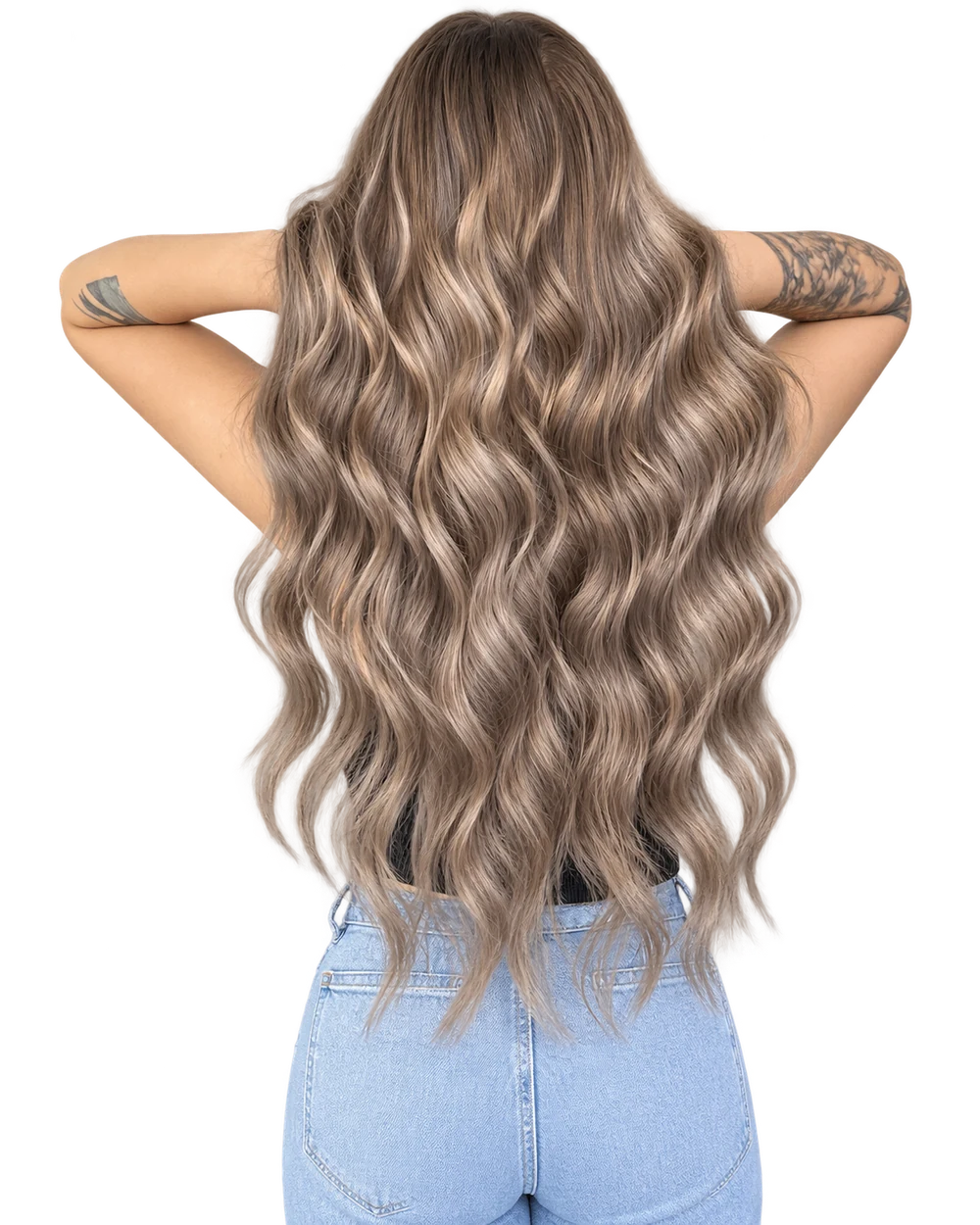
Dimensional blonde hair from Ali Akduru’s existing portfolio
COLOR, TEXTURE & THE CARE BETWEEN APPOINTMENTS

Choosing your shampoo

The right wash starts at the roots

Choosing shampoo begins with two questions: what does your scalp need, and what is your hair like? The answer is more useful than a single trend or ingredient claim.

Choose a shampoo formulated for your hair type. Oily scalps and fine, straight hair may need more frequent cleansing than dry, thick or curly hair. There is no single washing schedule for everyone.

For dandruff, choose an anti-dandruff shampoo and follow its label. A regular cosmetic shampoo and a medicated dandruff shampoo serve different purposes.

Consider your scalp, your hair texture and recent color services when choosing a product. Ask about the complete routine rather than assuming one ingredient claim makes a shampoo right for you.
Sources & further readingAAD: Shampoo choice and washing by hair type

Conditioner after every shampoo

The step worth keeping, every wash

Conditioner belongs in the conversation whether your hair is colored or completely natural. The important choices are where you apply it and how much your hair needs.

Dermatologists recommend conditioner after each shampoo. This applies to uncolored hair as well as color-treated hair; choose the formula and amount for your texture.

For fine or straight hair, concentrate rinse-out conditioner on the ends. Dry or curly hair may benefit from application through the lengths. Do not assume every conditioner should be massaged into the scalp.

Rinse-out conditioners and leave-in conditioners have different directions. Follow the label, and use scalp-specific products only as directed.

Sources & further readingAAD: Conditioning after shampooApplying conditioner by hair type

Everyday hair care

Good hair begins with everyday habits

The moments between salon appointments deserve attention, too. How you wash, condition and handle your hair becomes the foundation of a routine you can comfortably repeat.

Choose products for your hair type and wash according to how oily or dirty your scalp becomes. Concentrate shampoo on the scalp rather than scrubbing the lengths.

Condition after every shampoo, whether your hair is color-treated or uncolored. Fine or straight hair may need conditioner mainly on the ends; dry or curly hair may need it through the lengths. Detangle gently with a wide-tooth comb, starting at the ends.

Absorb moisture with a towel or T-shirt instead of rubbing. Wet hair needs gentle handling; avoid pulling through tangles.

Sources & further readingAAD: Tips for healthy hair

Tangles & detangling

The gentle art of detangling

A stubborn knot calls for patience. Slow down, give the hair some slip and let the comb work through a small section at a time.

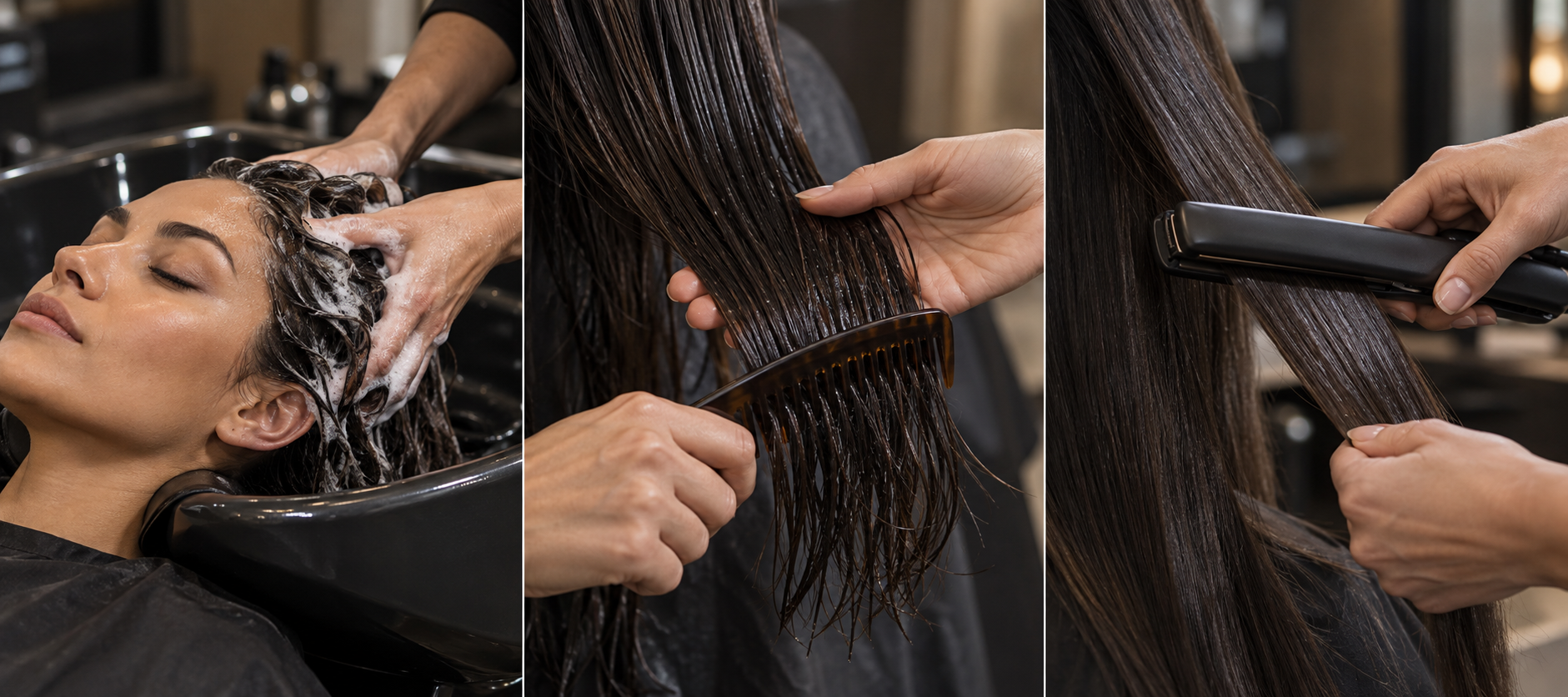
Illustrative scalp cleansing, detangling and heat styling scenes
Scalp to ends: a gentle approach. Illustrative imagery.

A leave-in conditioner or detangler can make knots easier to manage. Use a formula suited to your hair and follow its directions.

Work through the ends first, then gradually move upward. Support the section with your hand instead of tugging at the roots.

Curly hair can be detangled gently with conditioner in the shower. With straight hair, allow it to dry a little before gently combing.

Sources & further readingCleveland Clinic: Gentle brushing and detangling

Argan oil

A few drops of argan

Argan oil has a place in a thoughtful finishing routine. Used lightly, it is an option for lengths that still feel dry or look frizzy after conditioning.

The American Academy of Dermatology suggests a little oil, such as argan oil, when hair remains dry or frizzy after conditioning. Think of it as a cosmetic finishing step.

Choose a hair product suited to your texture and follow its label. Start sparingly on dry or frizzy lengths; fine hair can feel weighed down by rich products.

This guidance is about softness and manageability. It is not evidence that argan oil regrows hair or treats scalp disease.

Sources & further readingAAD: Leave-in conditioner and argan oil guidance

Hair oils: what the evidence says

Not all oils tell the same story

An oil can be a finishing touch or part of a wash-day routine. Its role depends on the formula, and evidence for one ingredient cannot be applied to every bottle on the shelf.

A laboratory study published in 2003 found reduced protein loss from hair fibers treated with coconut oil compared with mineral and sunflower oils. This was a hair-fiber finding, not proof of hair regrowth.

One finding about one oil does not establish that every oil or oil blend has the same benefit. A product formulation and your hair texture both matter.

Do not use a cosmetic hair oil as a substitute for assessment or treatment of persistent dandruff or hair loss.

Sources & further readingRele & Mohile, 2003 · Journal of Cosmetic Science · Hair-fiber study

Hair masks & deep conditioning

Make room for a little conditioning

A mask adds a moment of care to wash day. Look beyond the promise on the jar and consider the formula, your hair texture and the instructions for use.

Conditioning products can reduce friction and improve softness and combability. A mask is a product format; the word alone does not establish its effectiveness.

Choose a formula intended for your hair type and use the stated amount, contact time and rinsing instructions. Do not assume leaving a rinse-out mask overnight improves the result.

A smoother feel is not evidence of new hair growth or permanent reversal of all damage. Avoid treating a conditioning mask as a medical treatment for hair loss.

Sources & further readingShampoo and Conditioners, 2015 · Dermatology review

Color-treated hair

Life after the color appointment

Beautiful color does not end when you leave the chair. At home, the aim is to keep your hair manageable and give the lengths the attention they need.

Color-treated hair may benefit from a leave-in conditioner alongside a rinse-out conditioner. Choose a formula suited to your texture.

Apply leave-in conditioner according to its directions, concentrating on the hair rather than the scalp. Start with a small amount; finer hair usually needs a lighter touch.

Bring your current product list and tell Ali about recent color or chemical services. Discuss a home-care and maintenance plan for your particular color and hair condition.

Sources & further readingAAD: Leave-in conditioner tips

Heat styling & protection

A softer approach to heat

A polished finish can be part of your routine without turning every day into a high-heat styling session. Start with the temperature, the frequency and the products you use.

Limit hot-tool use and choose low or medium heat settings. Excessive heat can damage every hair type.

Use a heat-protection product as directed. Not every leave-in conditioner protects against heat; look for that claim on the packaging.

Ask Ali to demonstrate a finish you can repeat at home, with a styling routine suited to your texture and the tools you already use.

Sources & further readingAAD: Healthy hair and heat protection

Flat iron damage

The hidden cost of a perfectly smooth finish

The appeal is easy to understand: a few passes and the hair looks smooth. The question is how to achieve that finish while limiting unnecessary heat exposure.

Use a conventional flat iron only on dry hair and choose a low or medium setting. Avoid holding it in one spot or repeatedly working over the same section.

Frequent heat styling can weaken hair and lead to breakage. Use heat protection as directed and leave time between hot-tool sessions.

Heat protection does not make unlimited heat safe. If hair feels brittle or keeps breaking, reduce hot-tool use and discuss the condition of your hair before another chemical service.

Sources & further readingAAD: Habits that can damage hair

Wet hair & overnight care

Before your head meets the pillow

An evening wash can be a quiet ritual. Before going to bed, consider how damp your hair still is and whether your hairstyle is placing tension on the strands.

Letting hair air-dry is different from sleeping on it while wet or pulling it into a tight wet bun. Wet strands are more vulnerable to mechanical damage.

Allow your hair to dry before sleeping when possible. Avoid tight styles on damp hair and reduce rubbing and pulling.

Wet hair itself does not cause a cold. Prolonged dampness may favor microbial growth, but wet hair does not mean you will automatically develop an infection.

Sources & further readingCleveland Clinic: Wet hair and overnight risks

Dandruff & scalp care

What your scalp is trying to tell you

A few flakes on your shoulders can look like a simple problem. The cause is not always as straightforward. Dryness, dandruff and a reaction to a product can look similar, so thoughtful care begins with understanding what your scalp needs.

For dandruff, look for an anti-dandruff shampoo with an active ingredient such as ketoconazole, selenium sulfide or zinc pyrithione. Follow the product label, including how long to leave it on before rinsing.

Straight hair and oily scalps may need more frequent washing. Curly or coily hair may tolerate dandruff shampoo about once a week. Focus it on the scalp to help avoid drying the lengths.

Dry scalp is not always dandruff

Dry skin and dandruff can both flake, but they may need different care. A gentle, non-medicated shampoo may help simple dryness; dandruff often needs a targeted active ingredient.

Stress can trigger seborrheic dermatitis flares in some people. Itchy flakes at the back of the head do not, by their location alone, establish stress as the cause. Persistent patches, sores or patchy hair loss need medical assessment.

Products and irritation

A shampoo that irritates your scalp, a product allergy, or incompletely rinsed shampoo can cause itching and flaking that resembles dandruff. Stop a product that causes irritation and seek advice if symptoms persist.

If dandruff persists despite appropriate shampoo use, or your scalp is severely itchy, see a board-certified dermatologist. Flaking can also occur with other scalp conditions. A salon consultation does not replace a medical diagnosis.

Sources & further readingAAD: How to treat dandruffDry scalp and similar conditionsStress and seborrheic dermatitis triggersProduct irritation and scalp itching

Sweat, workouts & tied-back hair

After the workout, care for your scalp

After exercise, your scalp deserves the same consideration as the rest of your skin. Sweat, dampness and the tension of a tight hairstyle each call for a little attention.

The American Academy of Dermatology lists sweating as a possible seborrheic dermatitis trigger. Salt from sweat may irritate susceptible skin. This does not mean every sweaty scalp will develop dandruff.

Let your scalp and the nape of your neck dry, and adapt cleansing to sweat, oil and your hair type. Follow your dermatologist’s washing schedule if you have a scalp condition. Persistent itching or flaking should not simply be blamed on sweat.

Repeatedly pulling hair into tight ponytails or buns can cause breakage and traction-related hair loss. This is different from dandruff. Choose a comfortable, loose style and avoid pulling damp hair tightly against the scalp.

Sources & further readingAAD: Sweat and seborrheic dermatitis triggersTight styles and hair damage

Hair loss & thinning

When your hair needs a closer look

When your hair begins to look thinner, it is tempting to reach for a new product immediately. A better starting point is understanding the change before choosing a solution.

Hair loss has many possible causes. A board-certified dermatologist can assess the pattern and help identify the cause before recommending treatment.

Use gentle shampoo and conditioner, limit heat and avoid tightly pulled hairstyles. Persistent tension can cause traction alopecia.

Do not assume a hair-growth vitamin is the answer. Excess amounts of some nutrients can worsen hair loss; discuss supplements and any need for testing with a clinician.

Sources & further readingAAD: Managing hair loss

ALI’S PROFESSIONAL ADVICE

Thirty years.
A gentler touch.

After 30 years behind the chair, Ali’s advice is to give everyday handling as much attention as the finished look. He recommends gently drying the scalp after washing, particularly before bed or before tying the hair back. If using a dryer, keep the heat comfortable and the airflow moving.

When a knot becomes painful, pause. Use a suitable conditioner or detangler, work in small sections and begin at the ends. Ask for help with difficult tangles instead of forcing a brush through them.

These are Ali’s salon recommendations. Air-drying alone does not establish the cause of scalp pain; persistent pain, redness, sores or patchy hair loss needs dermatological assessment.

Ali Akduru

THE READING ROOM

Behind the advice.

The articles draw on patient guidance from the American Academy of Dermatology and Cleveland Clinic. Research adds context, with limits worth understanding.

Heat, drying and the strength of the evidence

A laboratory study found greater surface damage at higher drying temperatures. Drying method and duration also mattered; this does not establish that air-drying causes hair loss or that one method suits everyone.

Lee et al., 2011 · Hair shaft damage from heat and drying time

A case report describes hair-shaft abnormalities after hot ironing wet hair. It supports avoiding the practice but cannot establish how often damage occurs.

Hot ironing on wet hair · 2011 · Case report

Updated October 1, 2026. General education and salon perspective, not a personalized medical diagnosis.